

CUSTOMER SHOWCASE, DIGITIZING SHOWCASE
From Behind the Scenes to Seeing It on Television
Jul
Every now and then, something happens that reminds you why you love what you do.
A few evenings ago, I was watching SAFARI Roetes on kykNET when something on the screen immediately caught my attention. There, embroidered on the headrests, was a design I had digitized almost two years ago.
I recognised it instantly.
Not because it had my name on it—it didn’t—but because I remembered every detail of creating it. One feature, in particular, made it unforgettable: the city skyline silhouette running along the bottom of the lettering. It was a small design element, but one that required careful planning to embroider cleanly.
Seeing it on screen made me smile.
One of the most rewarding parts of being an embroidery digitizer is finally seeing a design become a real, physical product. So often, my work exists only as a digital embroidery file on a computer screen. I send it off, and that’s usually the last I see of it. Watching those embroidered seat covers on television reminded me that something I created had become part of a finished product that people were genuinely excited about.
Many people don’t really know what embroidery digitizing is. They assume the embroidery machine simply “prints” a logo onto fabric. In reality, every stitch has to be planned. Stitch directions, densities, pull compensation, sequencing, underlay, trims and countless other technical decisions all determine whether a design stitches beautifully or becomes a tangled mess. It’s a blend of engineering, creativity and experience.
The Safari Span logo was one of those designs that looked deceptively simple but required a great deal of thought. The distressed lettering and skyline detail had to remain recognisable while still stitching cleanly on automotive fabric. Those are the kinds of challenges that make digitizing both difficult and incredibly satisfying.
One thing I’ve learned over the years is that digitizers are often the invisible part of the embroidery industry. The spotlight quite rightly shines on the finished product, the embroidery company, and the customer receiving it. Behind that, though, there is usually someone who spent hours turning artwork into a stitch file that makes that final product possible.
I’m proud that my work has quietly contributed to many successful projects over the years. While the digitizer’s role isn’t always visible, it’s an essential part of the process. Like many creative professionals working behind the scenes, our contribution often goes unnoticed, even though the quality of the final embroidery depends on it.
Seeing this project on television wasn’t about recognition or applause. It was a reminder that the work I do matters. Knowing that something I carefully created is out there being used, appreciated, and representing a respected brand is incredibly rewarding.
Moments like these remind me why I still love digitizing embroidery after all these years.
Sometimes the greatest satisfaction isn’t having your name in the spotlight.
It’s recognising your own stitches from across the room.
Why Small Details Don’t Always Work in Thread
When I sit down to digitize a new embroidery design, I often find myself balancing two worlds: the perfection of the original artwork, and the practical realities of stitching it out.
This project reminded me of a lesson I first learned many years ago—not in embroidery, but in dance class. My mom, a stickler for detail, once got lost in the details of a costume (back then she made all our costumes). The dance instructor advised her:
‘On stage, costumes need to look good from far away. Don’t worry too much about the details.
That wisdom has stayed with me. Now, whenever I digitize embroidery designs, I keep it in the back of my mind. I try to remember that some designs needs to, from a distance, portray the basic idea of the design and not the exact details.
Embroidery is a medium of texture, thread, and stitches—it has limitations, but it also has incredible strengths.
The Challenge: Tiny Leaves in a Logo
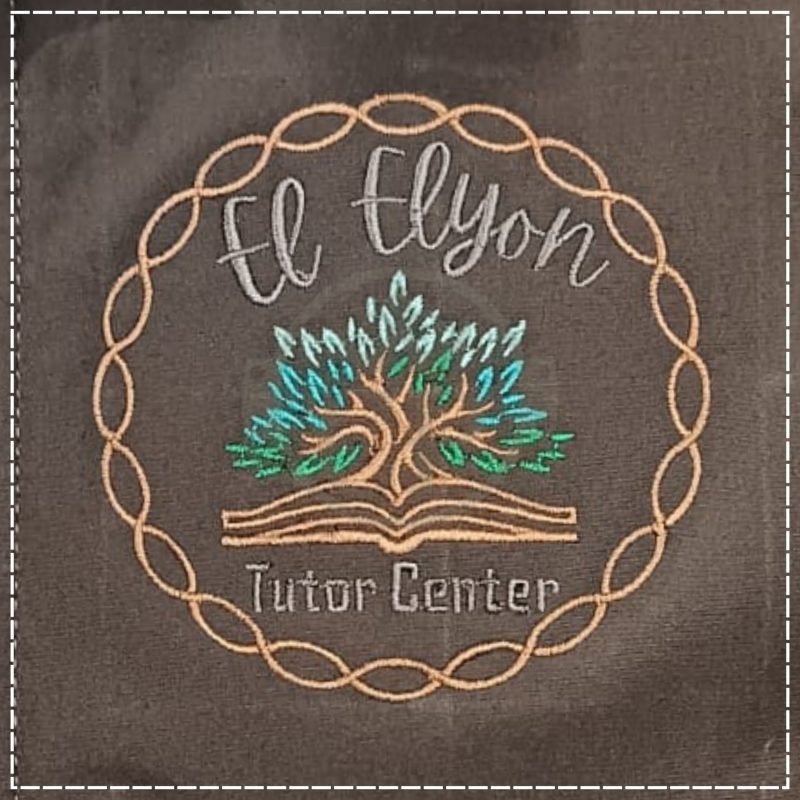
This particular design started out as a logo. Beautiful on paper, yes—but embroidery is not paper. The logo included very small, delicate leaves, and while they looked stunning in flat print, I knew immediately that they would not translate well into thread.
Here’s why:
✂️ Embroidery stitches have a physical size. A single stitch can only go so small before it either bunches up, breaks, or disappears into the fabric.
✂️ Very fine details may look sharp on a screen, but when stitched out, they can become fuzzy or distort the fabric.
Designs that are too intricate don’t just cause headaches for the person digitizing them—they’re frustrating for the customer who stitches them, too.

Original logo
Small detail of leaves visible

Digitized logo
Actual embroidery with simplified leaves
The Solution: Simplify Without Losing the Essence
So, I had to improvise. I studied the logo carefully and asked myself: What is the essence of these leaves? Do I need every single one, or can I reduce the number while still keeping the design recognizable?
By simplifying the leaf details, I could maintain the spirit of the logo without overloading the embroidery file. The final design kept the organic feel, but with fewer, larger shapes that stitch out cleanly.
This is where my dance teacher’s advice came in again. From a distance, the design looks just as beautiful as the logo. The details that were removed don’t make it “less than”—they make it stitchable.
Lessons for Embroidery Design
What I love about this process is that it shows how embroidery design is both technical and artistic. Sometimes, success means letting go of the tiniest details and focusing on the overall impact.
If you’re ever digitizing or commissioning embroidery from a logo, here are three tips to remember:
- Scale matters. Tiny details often need to be adapted.
- Think in thread, not pixels. What works on a screen won’t always work in stitches.
- Simplify with purpose. Keep the heart of the design, even if it means editing out small elements.
Why I Share These Behind-the-Scenes Moments
I know most people only ever see the polished, final embroidery file or stitched sample. But for me, sharing the creative problem-solving that happens behind the scenes is part of the fun. Every design has a story, and every challenge is a chance to find a new solution.
So next time you look at an embroidery design, know that it may have started out a little differently. The leaves might have been smaller, the shapes more intricate—but what you see now is the version that balances beauty with practicality.
And honestly? That’s the magic of embroidery.
Every now and then, something happens that reminds you why you love what you do.
A few evenings ago, I was watching SAFARI Roetes on kykNET when something on the screen immediately caught my attention. There, embroidered on the headrests, was a design I had digitized almost two years ago.
I recognised it instantly.
Not because it had my name on it—it didn’t—but because I remembered every detail of creating it. One feature, in particular, made it unforgettable: the city skyline silhouette running along the bottom of the lettering. It was a small design element, but one that required careful planning to embroider cleanly.
Seeing it on screen made me smile.
One of the most rewarding parts of being an embroidery digitizer is finally seeing a design become a real, physical product. So often, my work exists only as a digital embroidery file on a computer screen. I send it off, and that’s usually the last I see of it. Watching those embroidered seat covers on television reminded me that something I created had become part of a finished product that people were genuinely excited about.
Many people don’t really know what embroidery digitizing is. They assume the embroidery machine simply “prints” a logo onto fabric. In reality, every stitch has to be planned. Stitch directions, densities, pull compensation, sequencing, underlay, trims and countless other technical decisions all determine whether a design stitches beautifully or becomes a tangled mess. It’s a blend of engineering, creativity and experience.
The Safari Span logo was one of those designs that looked deceptively simple but required a great deal of thought. The distressed lettering and skyline detail had to remain recognisable while still stitching cleanly on automotive fabric. Those are the kinds of challenges that make digitizing both difficult and incredibly satisfying.
One thing I’ve learned over the years is that digitizers are often the invisible part of the embroidery industry. The spotlight quite rightly shines on the finished product, the embroidery company, and the customer receiving it. Behind that, though, there is usually someone who spent hours turning artwork into a stitch file that makes that final product possible.
I’m proud that my work has quietly contributed to many successful projects over the years. While the digitizer’s role isn’t always visible, it’s an essential part of the process. Like many creative professionals working behind the scenes, our contribution often goes unnoticed, even though the quality of the final embroidery depends on it.
Seeing this project on television wasn’t about recognition or applause. It was a reminder that the work I do matters. Knowing that something I carefully created is out there being used, appreciated, and representing a respected brand is incredibly rewarding.
Moments like these remind me why I still love digitizing embroidery after all these years.
Sometimes the greatest satisfaction isn’t having your name in the spotlight.
It’s recognising your own stitches from across the room.
